
marketing

Before digital media, old-school journalism was dedicated to objective storytelling of local, national, and other worldly events. A writer would pitch a story or receive assignments and find a plot-driven angle that would intrigue the publication’s readership. Every aspect of its investigative work relied on its strict ethical protocol dedicated to telling the story from an objective and factual standpoint. Once the piece was initially completed, it would run through a series of fact-checking and editing by dedicated members of the publication with that specific role.
Between 1995 – 1998, the infamous journalist Stephen Glass was a writer for The New Republic. He sought more entertainment in his storylines and either fabricated tales revolving around the assigned piece or created a complete work of fiction while submitting it as factual. An investigation led to his downfall. Ironically, in the present day, he may have successfully risen to YouTuber status with a massive following.
New School Journalism: Online articles
With the majority of journalistic pieces now published online, tradition is still intact, loosely. However, whether every written word is true remains up to the reader. When I worked in editorial for print publications, my writing criteria were slightly different. I wrote for the film industry. While facts were gold, there was more freedom in how they could be displayed. My approach was to include myself in the story as a first-person account from the interview to the story’s inception. Today, this has become the standard.
Digital Writing for Marketers
Content creation in marketing comes in many forms. In reference to writing, it focuses on a business’s customers and what they are seeking from their content search. It is the voice of the company and its brand, dedicated to building a rapport with loyal and prospective customers. There are several kinds of content writing.
Technical Writing
The majority of technical writing is dedicated to white papers or ebooks. This kind of writing stirs up some excitement for its creator as they embrace the challenge of transforming something complex into a simplified, easy-to-follow format that engages and educates its readers. Visual designs are also integrated into the material. Cisco Edge does an outstanding job of reiterating complex cybersecurity solutions into visually appealing and informative whitepapers.
Blogs
Blogs were born from digital media. They are sometimes the fun and inspiring tales of a writer with a personal and informal demeanor. Other times, they are knowledgeable pieces of information with a writer’s tone woven throughout the story.
Posts
We all know and love posts! They are the one or two-liners created by employees as a means of reaching out to others, and letting them know about their business, brand, products, and services. On behalf of a company, they are also written by happy customers.

During the print publication era of journalism, online media emerged, and many longtime writers feared its impact on the profession. Instead, it complemented our beloved field with new outlets to reach a broader range of readers. Similar to the world of journalism, professional designers encountered the same phenomena.
When Adobe Photoshop was first released in 1990, like all relatively new products, it wasn’t populated by the creative masses. However, with time and recognition, its popularity grew and expanded. In 2003, Creative Suite was introduced as a bundle package that included InDesign, Premiere, and other applications. Around this time, traditional graphic designers grew concerned that it would take over their field. The actuality is that it has evolved into a wide-ranging creative landscape for us.
Numerous other tools have been developed and implemented into design strategies. There are many wonderful, creative contributions. As for my own experience, when I design an image, I often utilize multiple software applications. Within the past year, I have even befriended AI imagery as a background template that I build on and combine with other tools. One image often runs through 2-4 different apps until it is completed. Sometimes, a single image entails several hours. That is the beauty of choices. They are mixed and matched to create something truly original.
In the spring of 2003, I decided to walk to the Third Street Promenade in Santa Monica, California. I shut the door to my small but charming apartment on Arizona Avenue and made it a few blocks. I pet a stray dog and decided to ring the doorbell of my new neighbor’s business to see if I could use their bathroom to wash my hands.
A woman popped her head out the door, looked around, and asked who I was and what I wanted.
“Hi! I’m Megan. I live close by, and I wanted to see if I could use your bathroom.”
She looked around again.
“We aren’t open yet.”
I couldn’t see past her, but I got the feeling she didn’t want me to, and I just said OK and continued walking. Several months later, a coworker told me, “You gotta check this out. There is this place called Google on the Internet. You type in any name, and information appears.
Then, it clicked. Google, which is a misspelling of its intended title “Googol,” was my new neighbor. It was the business I encountered before. The woman’s reluctant response suddenly made sense. The employees at Google must have had a hunch that they might become something bigger! And, they were right. Google’s actual launch date was in 1998, although not many of us were aware of it. I’m guessing they were preparing their business’s pursuits long before then.
SEO, search engine optimization, is the process of optimizing a website to rank high on Google’s search engine. It is intended to gain more recognition from a wider-ranging customer base that seeks a business’s products or services. Therefore, it has become prominent. In fact, some people attempt to “crack the SEO case” and rank very high, very fast. Hence, the reason for penalties and updates to Google’s algorithms.
Google changes its mind quite often. They also emphasize the importance of quality. Therefore, rather than quick results, there may be something associated with the algorithms that implies a ranking order based on gradual progression versus instantaneous success. After all, that is the road Google has traveled.
If that is the case, the best path to take would be an authentic one. The variety of marketing efforts, which include continuous blogs, articles, whitepapers, social media posts, videos, web designs, and imagery, is promising. If created thoughtfully and originally, customers often take notice. They know from a website and the marketing materials provided which businesses care. When Google visits a website, it puts on a customer’s glasses. And it knows, too.
The field of marketing is an exciting and creative asset for start-up or established businesses seeking to grow and expand. It relies on numerous tools and applications to bring a product, service, or brand to life! Accompanying the decision-making when strategizing a new campaign are data and metrics that pinpoint target audiences. But do they reveal the entire story?
The construction industry encapsulates a wide range of businesses, products, and services on multiple levels. From tool and equipment sales to B2B related business connections that work together to build residential and commercial properties, it is predominantly a male-dominated field. Market research that specifies demographics and detailed buyer persona charts will agree. Therefore, creating a marketing campaign driven to attract this particular consumer niche is the effective course of action.
Now, let’s shift perspective. According to a traditional saying, “behind every good man is a good woman.” This phrase, in modern-day, still pertains to the gender someone identifies with, and is worth exploring while creating a campaign. Who are the true decision-makers behind the buyers? Do their influences on purchasing decisions, blueprints, and locations emerge in data and metrics? Simply put, do the under-the-radar influencers offer a more feminine viewpoint? And if that is the case, how then would it reposition the creatives in a marketing campaign?

Long ago, web design was a series of code written only for its creator. Programmers worked numerous hours to build a standard website that displayed a business’s products or services. The bulk of small business websites were static pages that rarely changed. The bigger corporations hired in-house programmers dedicated to making simple requests that, due to coding, weren’t simple for the average folks.
And then… WordPress entered the scene. With templates to choose from, the installation was usually conducted by a skilled pro. However, there were options for blog updates and images that were relatively easy for a business’s creative team to update. WordPress is also a responsive website builder, which means it automatically realigns itself to fit tablet and mobile devices. While WordPress has made life easier on all of us in the marketing field, it has remained a full-time job. The ease of uploading new content regularly requires dedication and commitment. Also, WordPress, as a standalone CMS, has limitations regarding design elements and other creative options.
In 2025, there have been many extraordinary advancements in website development. While the latest tools are best suited for professionals with a history of creating WordPress websites, their ability to uplift WordPress has opened new doors filled with vast design possibilities.
With careful precision, every business website’s potential to reshape into its own unique brand is achievable. Rather than choosing one WordPress template, custom designs that harmonize different layouts into one website—pages, sections, design elements, plug-ins, fonts, motion graphics, and so much more are possible. It entails a lot more work. Custom designs don’t rely on responsive features that automatically translate to tablets and mobile; instead, they are often manually integrated. In the end, however, a business reflecting its originality catches the eye of customers seeking something new.

Steve Harvey began his journey towards entertainment with a dream. He wrote a short essay in school about his desire to be on TV one day, and his teacher reported this to his parents. She thought he was goofing off without taking his assignment seriously. According to Harvey, his mom wanted the best for him, and when he talked about his dreams of fame, she told him to aim for a good job with financial security. With sincerity, he advised his audience listeners that while his mama had his best interests at heart, God gave him the dream… his vision. And that is why he was the only one who could see it.
In 1994, Jeff Bezos started his small company, Cadabra. He later changed the name to Amazon. His goal was to create an online D2C bookstore. He lived in a small home in Bellevue, Washington. His business began in his garage.
The beginning of a dream is imperfect. There are words from someone else’s experiences that may feel like deterrents. There are fears of criticism over the imperfections. There are also the obstacles involved in the act of courage—just going for it! Without the years spent “perfecting a dream” before launching, there will always be things to overcome. The irony, however, is that to achieve any goal, walking among those hurdles may be the only way. It may be what shapes the dream into its fullest potential.
Many aspiring “Edward Bloom-types” flock to Los Angeles with star-gazing eyes and a dream. They often arrive and feel a sense of belonging. The pursuit of big ambitions reaches a crossroad with lengthy lists of reasons why chasing dreams isn’t a smart move. The same is true for most aspiring entrepreneurs, with the odds stacked against them. Upon entrance to Tinseltown, the dream begins to feel like a possibility. Actors and directors frequent the same places you go. Walking your dog past a blocked-off street for a movie production crew is the norm. The impossible transforms into possible right before your eyes.
Hollywood
Even the best performers with awards and recognition in their hometown arrive to Los Angeles and quickly discover that they are no longer big fish in a small pond. They are smaller fish in the biggest pond. While the traditional trail of thinking is to be competitive and rise above the others, that philosophy gets turned upside down once you’ve reached Hollywood. Competition becomes a non-winning entity. Collaboration is the savior.
The majority of new, ambitious creatives found each other early on, formed a circle, and pursued their dreams. Have you ever wondered why comedic films have a few cast members who were in several features together? The reason is that when one of them reaches the top, they hire their collaborators who were with them at the bottom. Rather than a competitive edge, there is a sense of togetherness.
YouTube
YouTubers Get It! With millions of followers, some influencers who began hosting YouTube channels for their friends became famous a few years later. They all have unique attributes and speak highly of one another. They come together for hosted events and have even appeared on each other’s episodes. They have chosen not to compete. Instead, YouTubers have built a friendly and collaborative community.
Marketing
There are a few top marketing agencies that are fiercely competitive and excellent at what they do. No doubt. I admire their work tremendously! However, the greatest gift I receive from them is a sense of my own authenticity. While I raise the bar for my own work based on their standards, they have also inspired me to follow a custom-designed path. And with my career’s roots having been planted in Los Angeles, my mission statement is grounded in the L.A. way.
It began with a full-length script. The trailer was written to complement the plot, capturing the film’s premise. From there, a casting call was placed in Los Angeles-based designated print and digital publications. We received hundreds of headshots attached to resumes. An audition room was provided, and our chosen guests arrived. There were so many talented actors, and the auditions lasted for two full days.
We cast the actors who best fit the roles. A production team was hired, storyboards were created, and filming days were scheduled. The two-minute trailer was completed in four 12-hour days. Next came editing. We hired an ambitious film editor who spent several weeks reviewing all the footage to piece it together. The project was for an indie film.
This is a similar glimpse into the production of a commercial for businesses. With high-end quality, the budget can be substantial, and the timeframe for completion varies from several weeks to months, depending on the number of scene locations and other details.
Content marketing encompasses a diverse range of materials, including video displays. There are numerous ways to articulate storytelling in motion. From original videos to background displays, graphics, font selections, audio, and many other assets, possibilities are infinite. The technological advancements related to marketing are ongoing and rapidly evolving. There are also choices in editing software, which is dependent on the size and purpose of the final product. Every marketer has their own signature flair and distinctive approach to content creation. With digital videos designed for websites and social media posts, the alternatives to large-scale commercial and film production lead to cost savings, a quick turnaround time, and high-quality content. It is another fantastic way to attract customers.
One of the requirements associated with psychology during my earlier college years was a course called physiology. It is the biological component covering how the human body works. The text and study materials were very complex, and I often found myself daydreaming during the readings and lectures. To put it another way, it was hard! My attention span for it was quite short. Needless to say, I didn’t pass, not just once but twice. On my third attempt, I recall walking into a big lecture hall with an enormous projector in the front of the room. The complexities were simplified through the use of animated animals and storytelling techniques. It was amazing!
Having taken the course twice already, I would be considered an “expert” on the objectives and study guide. The colorful and fun display covered 50-plus pages of the textbook at a time through simple dialogue and cartoon-like characters. The prior two difficult courses I attempted, unsuccessfully, were now illustrated with short sentences of dialogue. Every week, I looked forward to the class I once dreaded with enthusiastic anticipation. My final grade for the semester was an A.
Marketing a business and its brand is equivalent to what I learned from two failures and one A in physiology. Regardless of whether the company is a B2B or B2C business—except for a select few professions—simplifying the material is the ideal choice. Video is growing in popularity because of its simplicity in relaying a message. While it is very accessible for website and social media displays, email newsletter video content can run into difficulties because of the size of a video file and the room it needs within the email to open and play. Therefore, taking the softer road towards a solution is the best bet. For example, rather than having a video play at its normal size, I created an image that envelopes the video, shrinking it in size and adding to the decor of a Holiday email.
In a nutshell, absolutely brilliant business owners may even prefer colorful storytelling to lengthy, complex content. We are a world of color with numerous differences. We all comprehend things in multiple ways. Everyone has a special gift and higher intelligence. Therefore, creating websites and marketing materials that are creatively clear and easy to follow equate to conversions.

Discover the Pursuit
When she peered out the window, she saw her painting of Chicago. She closed her eyes and envisioned being there. While passing the shops, she could feel the wind blow through her hair. In the distance, she heard music intertwined with the sounds of cheerful chatter coming from a nearby local Irish pub. As she continued walking, the sweet smell of flavored coffee drifted through the air. Women carrying crisp white, logo-designed shopping bags exited glass double doors. They stepped onto the sidewalk in front of her. The tapping sound from their brand new high-heeled boots were entrancing. Yet, the barking dog from afar enticed her to change direction. She strolled down another block and approached a large park. Children played. Dogs ran free. Hot dog stands with hot steam rising above them “called her name.” Although it was chilly, her soft, collared coat and the sunlight shining down through the clouds were like a warm comforter. She loves this city.
Imagine the Bliss
He looked out at the ocean that always inspired him. He recalled standing in front of it, staring at a blank canvas. He picked up the brush and began. With each stroke, he could feel the icy tingling sensation from his flushed cheeks. It was as if he was transported there. He smiled up at the clear blue sky. The bright sun added impact to the victory dance inside his head. He still felt the adrenaline rushing through him. This time, he had glided down the mountain with ease. After numerous attempts, the lessons paid off. He could ski!
After pulling off his gloves, he turned to walk towards a large log cabin. There was a serene tranquility about the quietness that welcomed him inside. He ordered hot cocoa and sunk into a cushioned leather chair. He gently closed his eyes and listened to the fire’s crackling sounds.
Your brand. Their dream.

When the 12-year-old boy whizzes around a Unity platform, navigating its complexities and depth, his gifts begin to reveal themselves. His love for gaming and collaborating with online friends as they overcome the latest game-developing obstacles is a delight. Inspired by the pro game developers, some members of Generation Alpha have begun to follow in their footsteps.
But what if I share these insights about the 12-year-old boy’s special skills with educators who are concerned about his classroom performance? Does his gift begin to equate to goofing off if he can’t grasp “basic” geometry?
If he can understand complex developer tools and software at 12 years old, is he brilliant? If so, is he just not applying himself at school? Or, if struggling to grasp lesson plans persists, will he be classified as having a learning disability? What then? Will his hopeful technological aspirations begin to fade away?
Can someone be a brilliant, slow learner?
And, if so, what would be their label?
Series
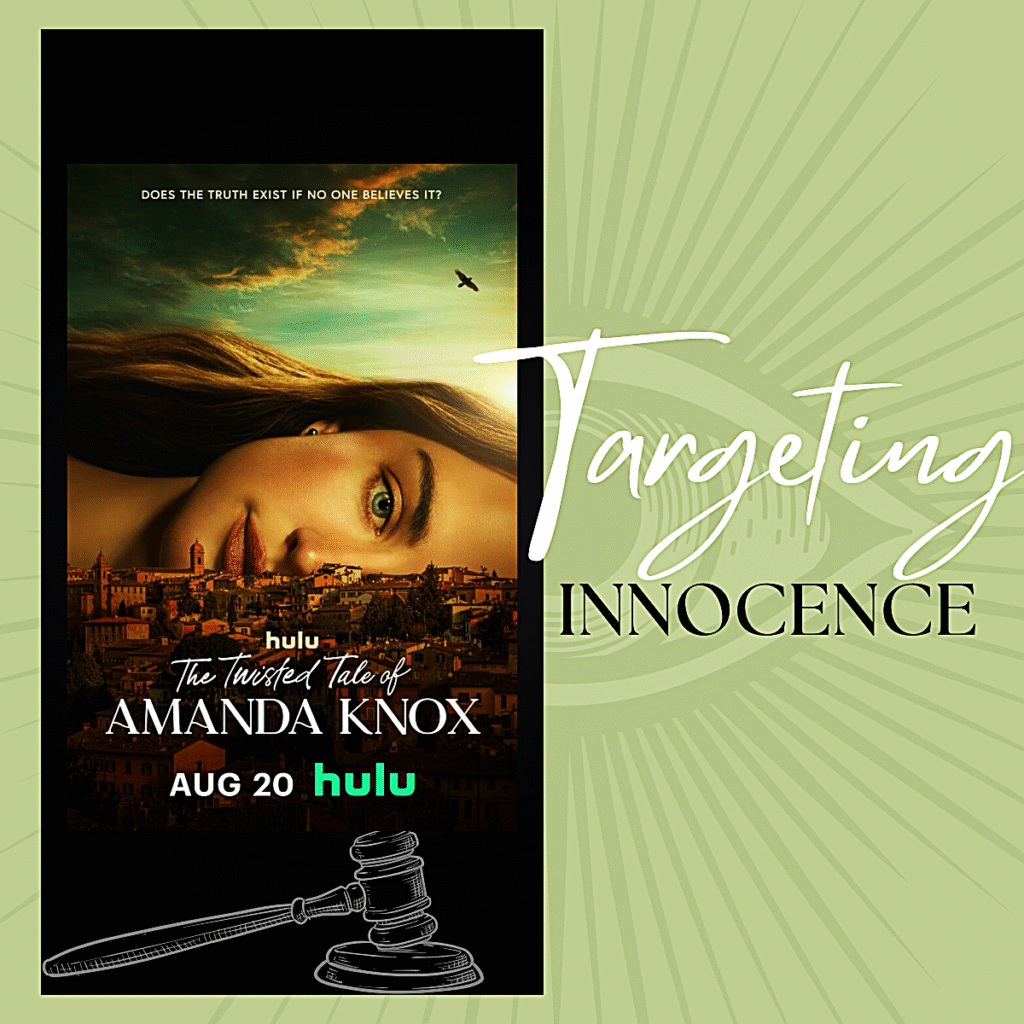
There are many faces of innocence, and through their subconscious mind’s guilty whispers, a lensed vision is born. It begins to go to work, seeking out the one face most easily influenced—the target of choice. Unaware, child-like in spirit with a natural ability to fully trust, innocence walks right into the whisperer’s trap and unknowingly shuts the door behind them.
Created by K.J. Steinberg, The Twisted Tale of Amanda Knox invites us into Knox’s brutal encounter with injustice, allowing viewers to bear witness to what truly happened to her beyond the scope of their lens.
What? Autobiographical true drama series
Where? Hulu
When? Next episode: August 27, 2025
Directors: Natalia Leite, Cate Shortland, Quyen Tran, Michael Uppendahl
Writers: Sam Rubinek, K.J. Steinberg, Mary Laws, Rebekah Barnett, Nate Burke, Amanda Knox, Sofya Levitsky-Weitz, Wesley Taylor
Stars: Grace Van Patten, Joe Lanza, Anna Van Patten
Directed by Lyttanya Shannon, Sweet Bobby: My Catfish Nightmare is the story of an innocent and trusting woman who was deceived into believing she had formed a friendship with a man online. Driven by an internal desire to care, love, and support those around her, she fell victim to catfishing. Nine years of her life were spent in a whirlwind of illusions and dishonesty. As time passed, the victimization reached new depths, and she found herself troubled, fearful, and uncertain about everything around her. From an outside perspective, she appeared to be unhinged. The reality was that her life had been unraveled.
Catfishing, although a crime that remains unidentifiable, directly impacts the quality of another human being’s life. Towards the end, the innocent woman discovered that her friendship with the man—including the friendships she accumulated through him—was concocted by only one woman who knew her well.
“How could you do this to me?” she asked.
“You did this to yourself!” replied the perpetrator.
Although she will never get back those stolen years, she embraces full responsibility in moving her life forward. She was featured in a documentary that offers better insight into how catfishing transpires. She pursues the quest of encouraging our legal community to push for updating laws that will recognize catfishing as a crime. She knows that this is something that happened to her, not something that defines her. And as a result, she is a survivor who triumphed.